How Your Roof Actually Ages: A Realistic Year-by-Year Performance Guide for Niagara Homeowners
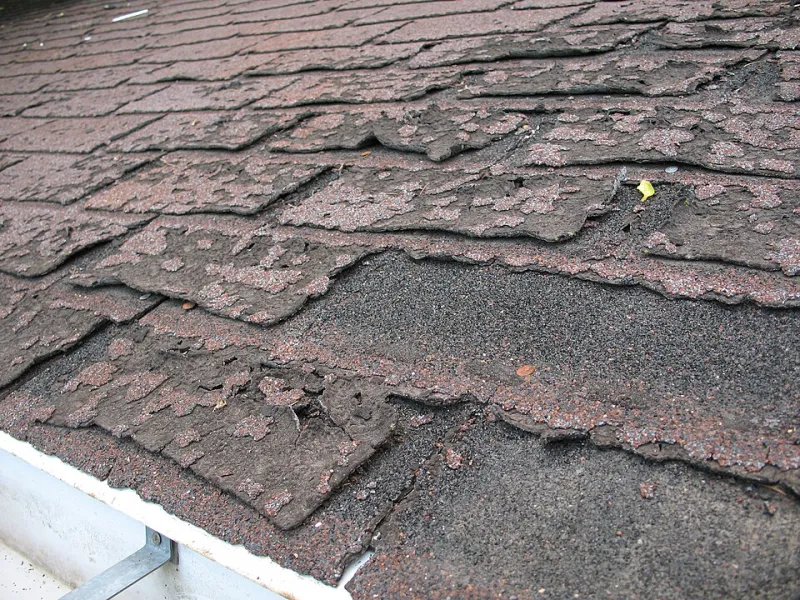
Photo: DMahalko, Dale Mahalko, Gilman, WI, USA -- Email: [email protected], CC BY-SA 3.0, via Wikimedia Commons
Purchasing a new roof is one of the larger investments a homeowner makes — and one of the least understood. Contractors quote warranties. Manufacturers publish expected lifespans. But what actually happens to a roof installed in St. Catharines, exposed to freeze-thaw cycles, Great Lakes moisture, and the full range of Niagara's seasonal extremes? The honest answer is more nuanced than any product brochure will tell you.
This guide is not about pessimism. It is about equipping homeowners with an accurate picture of how roofing materials degrade over time in this specific climate — so that decisions about maintenance, repair, and eventual replacement are grounded in regional reality rather than marketing language.
The First Five Years: The Honeymoon Period
Regardless of material choice, a properly installed roof in its early years should perform with minimal intervention. New asphalt shingles — whether standard three-tab or architectural — arrive from the factory with their full complement of granule coverage, intact sealant strips, and flexible composition. Metal roofing panels are tight, properly fastened, and sealed at every penetration. Flat membrane systems on commercial properties are adhered and uncompromised.
During this phase, the primary risks are installation-related rather than material-related. Improper flashing around chimneys, skylights, or vents; inadequate fastening patterns; or poor attic ventilation (as discussed elsewhere) can generate problems that appear within the first few years and are sometimes mistakenly attributed to defective materials.
For most St. Catharines homeowners, years one through five should be largely uneventful, provided the installation was competent and the underlying structure was sound. Annual visual inspections remain worthwhile, but significant expenditure is unlikely.
Years Five Through Ten: The First Signs of Differentiation
This is where roofing materials and installation quality begin to separate from one another in measurable ways.
Standard three-tab asphalt shingles — still found on a substantial portion of the region's housing stock — typically begin showing their first signs of granule loss during this window. You may notice dark deposits in your gutters or at the base of downspouts; this is granule sediment washing off the shingle surface. It is not immediately catastrophic, but it signals that the UV-resistant outer layer is beginning to thin.
Architectural shingles, with their heavier construction and laminated profile, tend to hold up more reliably through this period. Their greater mass provides better resistance to the thermal cycling that Niagara winters impose — the repeated expansion and contraction as temperatures move above and below freezing dozens of times each season.
Metal roofing, whether steel or aluminium, typically shows almost no performance degradation at this stage. The primary concern is fastener integrity and sealant condition at penetrations, both of which a qualified inspection can assess quickly.
For homeowners approaching the ten-year mark, a professional inspection is a sound investment. Problems identified now — a failing valley, a compromised flashing, minor membrane lifting on a flat section — are almost always far less expensive to address than if they are left to develop.
Years Ten Through Fifteen: Where Niagara's Climate Makes Its Presence Known
The second decade is where the gap between manufacturer promises and regional reality often becomes apparent. Warranties that cover twenty-five or thirty years are written for average conditions. St. Catharines does not always offer average conditions.
Freeze-thaw cycling is the primary accelerant. When water infiltrates even a minor crack in a shingle, granule loss, or compromised sealant and then freezes, it expands with considerable force. Over the course of a Niagara winter — which may deliver dozens of freeze-thaw events — small vulnerabilities become larger ones with notable speed.
Standard three-tab shingles installed around the turn of the millennium are now entering a range where replacement conversations become appropriate rather than premature. Architectural shingles from the same era should still have meaningful life remaining, but the quality of their specific installation and the adequacy of attic ventilation will have significantly influenced their actual condition.
Flat roofing systems on commercial and mixed-use properties — common across St. Catharines' older commercial corridors — often reach a decision point in this window. Modified bitumen and TPO membranes installed ten to fifteen years ago may show seam separation, surface cracking, or ponding water issues that require assessment.
Homeowners in this range should resist the temptation to apply a blanket repair strategy without a professional condition assessment. In some cases, targeted repairs extend a roof's useful life by several years at modest cost. In others, ongoing repairs become a cycle of diminishing returns against a roof that is approaching its practical end.
Years Fifteen Through Twenty: The Honest Reckoning
This is the period during which many St. Catharines homeowners face a genuinely difficult decision. A roof installed fifteen to twenty years ago may still appear functional from the street. Shingles are present. There are no active leaks. But surface appearance is an unreliable guide to structural integrity at this stage.
Beneath the visible surface, roof decking may have absorbed moisture over years of minor infiltration. Felt underlayment — the secondary barrier between the shingles and the deck — degrades over time and loses much of its protective capacity. Flashing sealants that were applied during original installation have long since hardened and cracked.
Architectural shingles from reputable manufacturers, installed correctly with proper ventilation in place, can legitimately perform well through this period and into the early twenties. However, the margin for deferred maintenance narrows considerably. A storm that a newer roof weathers without consequence can cause meaningful damage to one operating in this age range.
The financial calculus also shifts. Repair costs on a roof approaching twenty years rarely return equivalent value. Each repair addresses a specific symptom while the broader system continues to age. Homeowners who are planning to remain in their homes for a significant period often find that proactive replacement — on their own schedule, with their material of choice — is more economical than reactive replacement following a failure.
Years Twenty Through Twenty-Five: Managing the Transition
For roofing materials that have reached this threshold in Niagara's climate, the question is no longer whether replacement is coming but how to manage the timing wisely. Premium architectural shingles marketed with thirty-year warranties sometimes reach this stage in reasonable condition; standard products rarely do.
Metal roofing is a meaningful exception. Steel and aluminium systems installed and maintained properly can perform well beyond this window, making them a compelling choice for homeowners who intend to stay in their properties long-term and want to avoid the replacement cycle altogether.
For those approaching or within this range, a thorough professional inspection provides the information needed to make a confident decision. The goal is not to replace a roof prematurely, but to avoid the significantly higher costs — both financial and structural — that accompany a roof that fails rather than one that is replaced on a planned basis.
Making Better Decisions at Every Stage
The most useful thing this timeline offers is not a countdown. It is a framework for honest, informed conversations about a critical component of your home. Knowing where your roof sits on its realistic performance curve — not just its warranty period — allows you to budget appropriately, maintain proactively, and replace strategically.
At St. Catharines Roofing Pros, we work with homeowners across the Niagara Region at every stage of this cycle. Whether your roof is newly installed, approaching a decision point, or well past its practical lifespan, understanding its actual condition is always the right place to start.