The Quote That Told You to Wait: Why the Most Trustworthy Roofer Is the One Who Talks You Out of Work
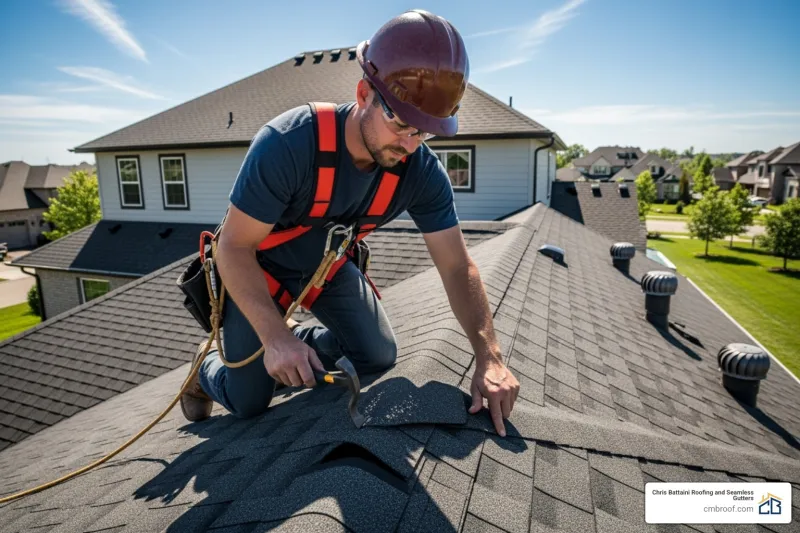
Photo: roofer inspecting asphalt shingle roof residential home Ontario, via images.bannerbear.com
There is a particular kind of quote that doesn't get talked about much in the roofing industry: the one that recommends less work than the homeowner asked for. In a trade where a full replacement can be worth five or six figures and a repair a fraction of that, the contractor who says not yet is, in a very real sense, talking themselves out of money.
And yet across the Niagara Region, experienced roofers do it more often than most homeowners realise. The problem is that these moments of honesty rarely make it into the final contract — because the homeowner, holding two competing quotes, often chooses the bigger number anyway.
When Honesty Loses the Job
Ask around among long-serving roofers in St. Catharines and a familiar story emerges. A homeowner calls convinced their roof is failing — perhaps a neighbour had a full replacement, or a door-knocker pointed at their shingles and mentioned the word storm damage. The roofer climbs up, inspects, and finds a roof with a decade of serviceable life left. The flashing needs attention. A few shingles should be resealed. The total comes to a few hundred dollars.
The homeowner thanks them politely, and the call never comes back. Later, they spot the neighbour's contractor's truck in the driveway, and by autumn there's a brand-new roof overhead — one the house didn't need.
For the contractor, the arithmetic is brutal. The honest assessment cost them a site visit, an hour of labour, and eventually the contract. The competitor who quoted the full replacement won the work. It's not difficult to see how the industry develops a reputation for upselling when the market rewards it.
The Economics of Telling the Truth
It's worth being clear-eyed about the incentive structure. A roofing company that systematically recommends more work than necessary will, in the short term, out-earn one that doesn't. The only counterweights are reputation, referral business, and the possibility that a homeowner recognises the difference.
This is why the we don't need to do that yet quote deserves genuine attention. A contractor who walks a homeowner through a roof and concludes with a modest repair — while explicitly stating the replacement can wait five years — has just made a costly admission. They've told you something a salesperson would never volunteer.
How to Spot a Contractor Who Isn't Selling You a Roof
Homeowners in St. Catharines can protect themselves by watching for a few telltale behaviours:
They show you what they see. Photographs from the roof, attic moisture readings, close-ups of the failing flashing. Vague recommendations paired with a large number are a warning sign; evidence paired with a modest one is reassuring.
They discuss timelines, not just tasks. An honest assessment includes when work will be needed, not only what. If a roofer says the shingles have three to five years left and offers to revisit the estimate closer to the date, that's a professional managing a relationship, not closing a sale.
They explain what they're not doing. The best quotes include exclusions. If a contractor tells you a full tear-off isn't warranted and why — and what would change their mind — you're dealing with someone accountable to their own assessment.
They're comfortable with you getting a second opinion. Defensiveness about comparison shopping is rarely a good sign in any trade.
The Counterintuitive Test
Here is a practical exercise for your next roofing estimate in the Niagara Region: ask each contractor directly, would you replace this roof today if it were yours? Then watch what happens. A sales-driven operation will find reasons the answer is yes. An honest one will hesitate, quantify what's actually failing, and give you a realistic maintenance timeline.
The cheapest quote and the most expensive quote both deserve scrutiny. But the quote that recommends less than you expected — with clear reasoning attached — is often the one written by someone planning to still be in business when your roof actually needs them.
In a trade where trust is the entire product, the advice that costs a roofer the job might be the best advice you ever receive.