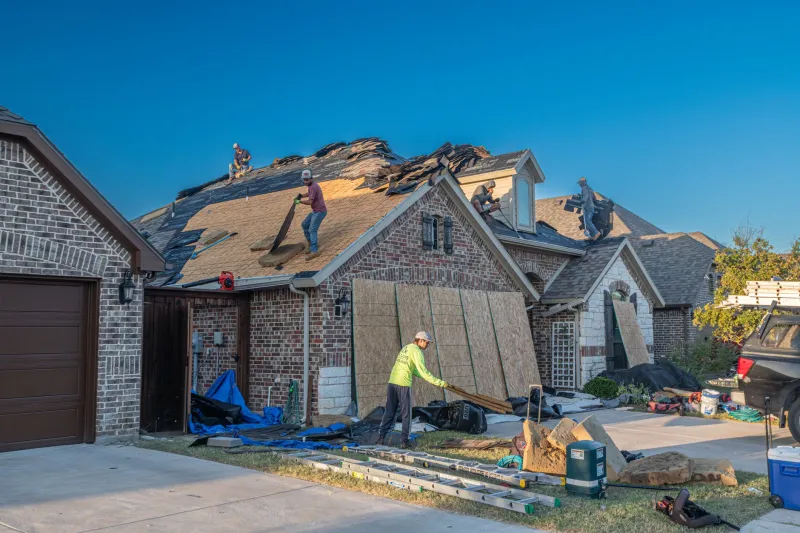
Read It Twice, Then Sign Once: Seven Clauses Niagara Homeowners Should Never Ignore in a Roofing Contract
Photo: USDAgov, Public domain, via Wikimedia Commons
A roofing contract is more than a formality. It is the single document that determines what happens when materials arrive late, when the scope changes mid-project, or when a crew leaves and the work doesn't match what was discussed on your front step. In Ontario, where roofing is a regulated trade activity and consumer protection law sets real limits on what a contractor can ask of you, understanding that document is not optional — it is the difference between a smooth project and a costly dispute.
At St. Catharines Roofing Pros, we have reviewed hundreds of contracts over the years, both our own and those homeowners bring to us for a second opinion. The same traps appear again and again. Here are the seven that deserve your closest attention before you sign anything.
1. Deposits That Exceed What Ontario Law Allows
Under Ontario's Consumer Protection Act, home renovation contracts are subject to strict payment rules. A contractor may ask for no more than 10% of the contract price or 10% of each progress payment as a deposit, whichever is less. A request for 30% or 50% up front is not aggressive negotiating — it is a legal red flag.
Large upfront deposits leave you with no leverage. If the company folds, delays for months, or simply disappears, recovering your money through small claims court or a chargeback becomes far harder. Legitimate contractors carry supplier accounts and can finance materials on their own credit. If a company cannot, ask why.
2. Vague Material Specifications
A contract that says "architectural shingles installed to manufacturer standards" tells you almost nothing. Which manufacturer? Which product line? What warranty tier? A 30-year and a 25-year shingle from the same brand can differ in price and performance, and once the roof is installed, proving what you actually paid for becomes difficult.
A proper contract names the product, the colour, the underlayment type, the ice-and-water protection coverage, and the fasteners. If a contractor resists putting specifics in writing, treat that resistance as information.
3. Missing Lien Protection Language
In Ontario, unpaid suppliers and subcontractors can place a lien on your home — even if you paid the contractor in full. This is why progress payments should be tied to defined milestones, and why a responsible contractor will provide proof of payment to suppliers or, on larger commercial projects, statutory holdback arrangements.
If the contract is silent on how and when your money reaches suppliers, ask. A contractor who bristles at the question may be the one with the cash-flow problem.
4. Verbal Promises That Never Made It to Paper
"We'll upgrade the flashing." "We'll include the skylight sealing." "Of course we'll haul away the old shingles." If it was said on your driveway and isn't in the contract, it doesn't exist. Ontario courts and tribunals generally look to the written agreement, and a handshake promise is nearly impossible to enforce.
Before signing, read the entire document and reconcile it against everything discussed. Anything missing should be added as a written amendment — initialed by both parties — before work begins.
5. Undefined Scope and Change-Order Terms
Roofing in the Niagara Region often uncovers surprises: rotted decking under old shingles, inadequate ventilation, damaged rafters. A fair contract anticipates this. It should state the unit price for replacing damaged plywood and require your written approval before any change is made.
Contracts that allow the contractor to "adjust pricing as necessary" without a signed change order are an open invitation to scope creep. You should always know the cost of a change before it happens, not when the invoice arrives.
6. No Start Date, No Completion Timeline, No Weather Provisions
A contract without a start window or estimated completion period gives you no recourse if the project drags across weeks. A reasonable agreement includes an approximate start date, an estimated duration, and a fair process for weather delays — which, given lake-effect snow and spring rain in St. Catharines, are a legitimate part of roofing. Vagueness on timing is a warning sign; so is a contract with no remedy at all if the contractor walks away.
7. No Warranty Documentation
The contract should state, in writing, both the manufacturer's material warranty and the contractor's workmanship warranty — including the length of coverage and what voids it. A workmanship warranty that exists only as a slogan on a business card protects no one.
A Pre-Signing Checklist
Print this and keep it beside the contract:
- Deposit is 10% or less, as required by Ontario law
- All materials are named by brand, product line, and colour
- Underlayment, ice-and-water shield, and ventilation specs are included
- Payment schedule is tied to completed milestones, not calendar dates
- Change orders require your written approval at agreed unit prices
- Start window, estimated duration, and weather-delay terms are stated
- Workmanship and manufacturer warranties are described in writing
- Every verbal promise has been added to the document and initialled
- The contractor's licence or business registration, WSIB clearance, and insurance details are on file
One final note: a reputable contractor will welcome these questions. We certainly do. Homeowners who read carefully are, in our experience, the ones who end up satisfied — and the ones whose roofs we're proud to put our name on.