Living on the Vineyard's Doorstep: How Niagara's Agricultural Landscape Reshapes Your Roofing Priorities
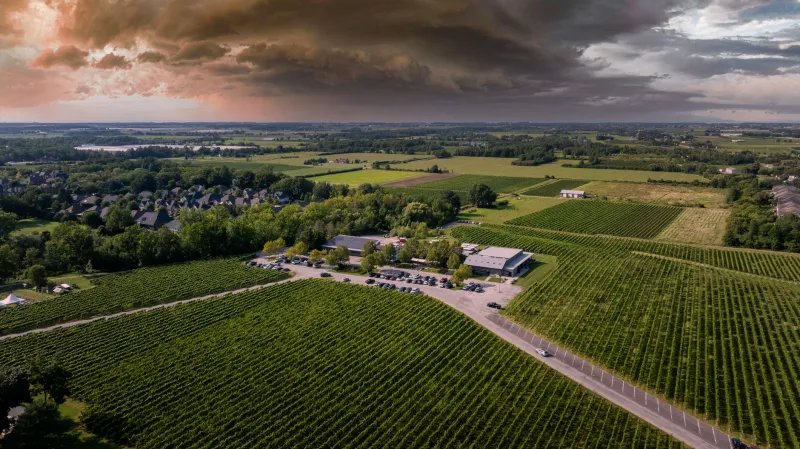
A Roof on the Edge of the Fields
Drive west along the brow of the Niagara Escarpment and you'll notice something the city maps don't capture: the neighbourhoods thin out, the hedgerows disappear, and the rooflines of St. Catharines homes stand nearly exposed against the sky. In communities bordering the vineyards between Fourth Avenue and the Bench lands, a house can sit a few minutes' walk from suburban grid streets yet experience weather conditions closer to those of a lakeshore cottage.
For homeowners in these transitional zones, roofing is not a one-size-fits-all exercise. The same asphalt shingle installed in a protected subdivision off Louth Street will age, wear, and fail differently on a lot backing onto open agricultural land.
The Wind Corridor Effect
The most immediate difference is airflow. Vineyards and harvested fields offer almost no windbreak, and the Escarpment channels prevailing southwesterlies across these properties with little resistance. Roofing crews working in these pockets routinely report:
- Higher shingle tab lift during gusts, particularly on three-tab products
- Accelerated granule loss on windward slopes
- Greater stress on ridge caps and edge metal
Moisture from the Ground Up
Less obvious is the humidity signature of working agricultural land. Irrigation, morning canopy moisture, and the sheer volume of vegetation in wine country raise ambient humidity levels on adjacent properties. Combined with the Great Lakes' broader moisture influence, this means eaves, fascia, and attic ventilation systems on vineyard-adjacent homes work harder year-round.
We've inspected homes two streets apart where the field-facing roof showed early signs of algae staining and decking moisture while the street-facing side remained pristine. Orientation matters, and so does what's growing next door.
Material Choices That Hold Up
For these exposures, our recommendations typically differ from standard suburban advice:
- Architectural laminated shingles with high wind ratings (130 km/h or better) rather than entry-level three-tab products
- Enhanced underlayment at eaves and valleys, where wind-driven rain finds its way first
- Metal roofing as a serious consideration — its interlocking panels and lower profile shed wind and shed moisture exceptionally well
Before You Sign, Ask the Right Questions
If your property borders vineyard, orchard, or open land, bring these questions to any contractor you're considering:
- What wind rating is specified for the fastening system, not just the shingle?
- Is attic ventilation being recalculated for a higher-humidity microclimate?
- Are starter strips and edge detail rated for the exposure, or merely to code minimum?
The Local Advantage
Roofing in Niagara wine country isn't exotic, but it is specific. A contractor familiar with the Bench lands, the Escarpment brow, and the moisture patterns unique to the region will price the job honestly and spec it correctly the first time. If your home sits where the subdivisions end and the grape rows begin, that local knowledge isn't a luxury — it's the difference between a roof that lasts twenty-five years and one that needs revisiting in fifteen.