Feet on the Ground, Eyes on the Shingles: The Post-Storm Walkaround Every St. Catharines Homeowner Should Master

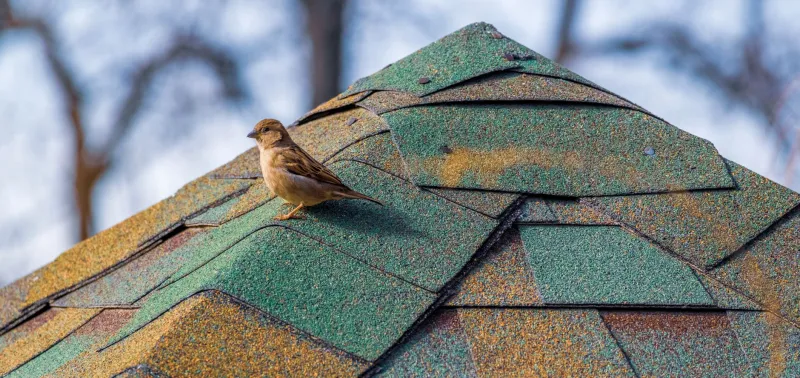
Photo: USDAgov, Public domain, via Wikimedia Commons
Why the First Hour After a Storm Matters
When a wind warning is issued for the Niagara Region, most homeowners think about downed power lines and fallen branches. What they rarely consider — until a ceiling stain appears weeks later — is what the wind did to their roof. The truth is that storm damage often announces itself quietly: a shingle tab in the yard, a downspout knocked slightly askew, a ridge cap sitting a few millimetres out of place.
The good news? You don't need a ladder, harness, or any roofing experience to gather genuinely useful information. What you need is a structured walkaround, a pair of binoculars, and about fifteen minutes of your time.
A critical ground rule before we begin: never climb onto your roof to assess storm damage. Ground-level observation, combined with binoculars or a smartphone camera zoom, provides more than enough detail to determine whether professional follow-up is needed. Falls remain the leading cause of serious roofing-related injuries among homeowners, and a wet or debris-strewn roof surface multiplies the risk considerably.
Your Fifteen-Minute Walkaround, Step by Step
Minutes 1–5: Start at the Corners and Work the Perimeter
Begin at each corner of your property and walk the full perimeter, keeping your eyes on the roofline rather than straight ahead. You're looking for the roof's overall silhouette — any sagging ridge lines, uneven planes, or sections where shingles appear raised or missing.
From the ground, lifted shingles often read as a subtle discolouration or a shadow line along the lower edge of a shingle course. Wind-lifted tabs can curl upward just enough to catch light differently from their neighbours. If you notice a patch of roof that looks darker than the surrounding area, that's frequently exposed asphalt where granules or an entire shingle has torn away.
Minutes 5–8: Read the Debris Trail
Storm debris tells a story, and it always points back to its source. Scan your lawn, driveway, and gardens for:
- Shingle tabs or fragments — asphalt pieces with a granular texture almost certainly came from your roof, not a neighbour's
- Granule piles — coarse black sand accumulating at the base of downspouts suggests shingles took a beating
- Ridge cap pieces — thicker, pre-bent shingle sections indicate damage at the roof's peak
- Nails or nail heads — a sign that entire shingles have pulled free
Take photographs of anything you find and note where on the property it landed. Debris position helps a professional later trace damage to a specific roof section.
Minutes 8–11: Inspect the Gutters, Fascia, and Soffits
Wind events frequently damage the roof's drainage edge before anything else. Walk close to the house and check whether your eavestroughs are still securely fastened, hanging level, and free of large dents. Look up at the fascia boards and soffits for anything that appears loose, warped, or water-stained. A gutter that has pulled away from the fascia even slightly can redirect meltwater and rain against the roof deck — a slow-motion problem that outlasts the storm itself.
Minutes 11–15: The Binocular Pass
With the perimeter covered, stand back — across the street if the sightline allows — and do a slow, deliberate scan with binoculars or your phone's zoom. Focus on these high-priority areas:
- Ridge caps and hip lines, which are the most wind-vulnerable points on any sloped roof
- Flashing around the chimney, plumbing vents, and skylights, checking for sections that appear bent, lifted, or separated
- Valley lines, where two roof planes meet and water concentrates
- Any satellite dishes, antennas, or roof-mounted equipment, which can tear loose and drag shingles with them
Ground-Level Findings: When to Wait, When to Act
Not every observation demands an emergency call. Here's a practical way to triage what you've seen.
Safe to Monitor
A few granules in the gutters, minor debris on the lawn with no visible roof damage, or a single small branch resting on the roof (provided it isn't pressing on anything) can typically wait for a scheduled professional assessment. Photograph everything and note the date of the storm — insurance timelines matter in Ontario, and documentation from the day of the event is valuable even if no damage is apparent yet.
Book a Professional Inspection Within Days
Lifted or curled shingle tabs, a dented or detached downspout, damaged flashing, or debris that clearly originated from the roof all justify a prompt inspection. These are the kinds of issues that look minor from the driveway but compromise the water-shedding integrity of the roof system underneath.
Call Same-Day
Missing sections of shingles, visible sagging, a large branch or tree limb striking the roof, or any sign of interior water entry — active drips, bulging drywall, a sudden ceiling stain — warrant immediate professional attention. Temporary interior measures (moving belongings, catching water, placing a tarp over the affected area only if it's safely reachable) should come first; the roof itself is a job for trained crews with proper fall protection.
Why This Habit Pays Dividends in Niagara
The Niagara Region sits in a corridor where Lake-effect systems, severe thunderstorms, and the occasional remnant of a tropical system deliver damaging winds year after year. Homes in St. Catharines, Thorold, and Lincoln weather the same systems differently depending on tree cover, roof orientation, and shingle age — which is why a personal baseline matters.
Homeowners who perform a walkaround after every significant wind event develop an intuitive sense of what their roof normally looks like. That familiarity is what makes the abnormal easy to spot. A lifted shingle means little to someone who has never looked; it's immediately obvious to someone who has.
Fifteen minutes, a pair of binoculars, and a few photographs. That's the entire investment — and it's the difference between a documented, manageable repair and a surprise that appears on your ceiling months later. If your walkaround turns up anything on the 'call a professional' list, our team at St. Catharines Roofing Pros is always available for a thorough follow-up assessment.