From Minor Leak to Major Bill: How Postponing Roof Repairs Compounds Costs for Niagara Homeowners

Photo by Photo by Jacob Rudge on Unsplash on Unsplash
There is a particular kind of optimism that affects homeowners when they notice a small water stain on the ceiling or a couple of missing shingles after a windstorm. It whispers that the problem is minor, that it can wait until next paycheque, next season, next year. In the Niagara region, where freeze-thaw cycles, lake-effect moisture, and heavy spring rains are annual certainties, that optimism carries a steep financial penalty.
At St. Catharines Roofing Pros, we have seen firsthand how a repair that would have cost a few hundred dollars in spring becomes a five-figure restoration project by autumn. Understanding why that escalation happens — and how quickly — is the most effective argument for acting promptly.
The Anatomy of a Deferred Repair
Consider a straightforward scenario: a homeowner in St. Catharines notices a small area of lifted or cracked shingles near a valley flashing after winter. The initial repair — resetting or replacing a section of shingles and resealing the flashing — would typically fall in the $400 to $700 range for a qualified roofing contractor.
Left unaddressed through spring, that same gap allows water infiltration each time it rains. The underlayment, already stressed from winter freeze-thaw cycles, begins to saturate. By the time summer humidity sets in, the roof deck beneath — typically oriented strand board (OSB) — has absorbed enough moisture to begin softening and delaminating. The repair cost has now climbed to $1,500 to $2,500, because the deck section must be replaced before new shingles can be installed.
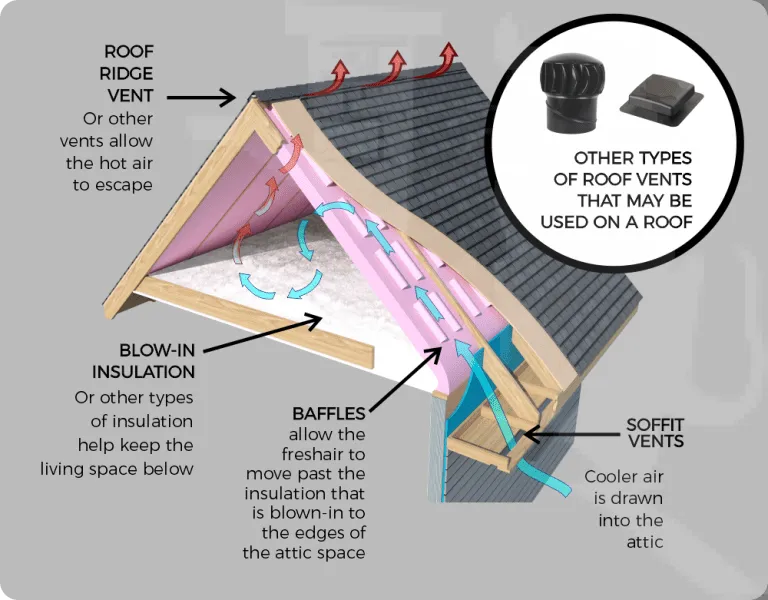
If the homeowner waits another season, water has tracked along the rafters and reached the attic insulation. Wet insulation loses most of its thermal value and, in Niagara's humid summers, becomes an ideal environment for mould colonisation. Mould remediation in an attic space typically runs $1,500 to $4,000 depending on the extent of growth, and in some cases requires the removal and replacement of insulation entirely — adding another $2,000 to $5,000 to the bill.
At this stage, what started as a $500 repair has become a $6,000 to $10,000 project. And the cascade is not finished.
When Structural Damage Enters the Equation
Prolonged moisture intrusion does not stay neatly contained to the attic. Water follows the path of least resistance, and in many St. Catharines homes — particularly those built in the mid-twentieth century with older framing conventions — that path leads to wall cavities, ceiling joists, and eventually interior living spaces.
Once water penetrates interior drywall, the visible damage (staining, bubbling paint, sagging ceilings) is merely the surface symptom. Behind the drywall, wood framing may have begun to rot. Electrical wiring exposed to sustained moisture becomes a fire and code-compliance concern. In severe cases, structural engineers must assess load-bearing members before any cosmetic repairs can proceed.
At this stage, a homeowner is no longer dealing with a roofing contractor alone. They are coordinating between roofers, insulation specialists, mould remediators, drywall contractors, and potentially electricians. Project costs in this range frequently exceed $15,000 to $25,000 — and that figure assumes no foundation or drainage complications have compounded the situation.
The Insurance Dimension: A Costly Misunderstanding
Many St. Catharines homeowners assume their home insurance policy will absorb the financial shock of significant roof-related damage. The reality is considerably more complicated.
Most standard Canadian home insurance policies cover sudden and accidental damage — a tree branch puncturing a roof during a storm, for instance. They do not cover damage resulting from gradual deterioration or deferred maintenance. When an adjuster examines a claim and determines that the water damage stems from a roof that was already compromised and left unrepaired, the claim may be denied in full or significantly reduced.
Worse, a history of deferred maintenance can affect your renewability or premium rating at policy renewal. Insurers operating in Ontario have become increasingly attentive to roof age and condition, and a documented pattern of neglect provides grounds for adjusting your coverage terms.
The homeowner who delayed a $500 repair may ultimately find themselves facing a $20,000 restoration project with limited or no insurance contribution — entirely out of pocket.
Niagara's Climate Accelerates the Timeline
It is worth emphasising that the escalation described above does not unfold over decades in this region — it can progress meaningfully within a single year. The Niagara Peninsula's proximity to Lake Ontario and Lake Erie creates a climate that is unusually punishing for roofing systems.
Winter brings repeated freeze-thaw cycles that force water into every microscopic gap and expand it into a crack. Spring delivers sustained rainfall that exploits those cracks before any drying can occur. Summer humidity prevents moisture-laden structural components from drying out fully. By the time autumn arrives, a small vulnerability that went unaddressed in March has had four seasons of active deterioration working against it.
For homeowners in St. Catharines, Thorold, Welland, and surrounding communities, the regional climate is not a background variable — it is an active accelerant of roof damage.
Practical Benchmarks: What Timely Action Actually Costs
To make the financial argument concrete, here is a general cost comparison between addressing common roofing issues promptly versus after significant delay:
- Cracked or missing shingles (caught early): $300 – $700 | Delayed by 12–18 months: $2,000 – $5,000 including deck repair
- Flashing failure around a chimney or skylight (caught early): $400 – $900 | Delayed by one to two winters: $3,000 – $8,000 including interior water damage repair
- Blocked or damaged soffit ventilation (caught early): $200 – $500 | Delayed by two or more seasons: $4,000 – $10,000 including mould remediation and insulation replacement
- Minor ponding area on a flat commercial roof (caught early): $500 – $1,200 | Delayed by one year: $5,000 – $15,000 including membrane replacement and substrate repair
These figures are not worst-case projections — they reflect the kinds of projects our team regularly encounters when homeowners call after a problem has been allowed to develop.
The Inspection as Financial Protection
The most cost-effective tool available to a Niagara homeowner is a professional roof inspection conducted at least once per year — ideally in late spring after winter stress has been applied, and again in early autumn before cold weather sets in.
A qualified roofing professional can identify developing vulnerabilities before they become active failure points. The cost of an inspection is modest. The cost of the information it provides — knowing exactly what your roof needs and when — is considerably more valuable.
At St. Catharines Roofing Pros, we approach every inspection with the understanding that our job is not simply to identify problems but to help homeowners make informed decisions about their maintenance priorities. A small repair addressed promptly is a straightforward transaction. A restoration project that results from years of inaction is a financial disruption that affects families in ways that extend well beyond the invoice.
Acting Before the Problem Acts for You
Deferred maintenance is never truly free. Every month a compromised roof goes unaddressed, the cost of eventual repair quietly accumulates — in structural deterioration, in mould risk, in insurance exposure, and in the sheer complexity of coordinating a multi-trade restoration.
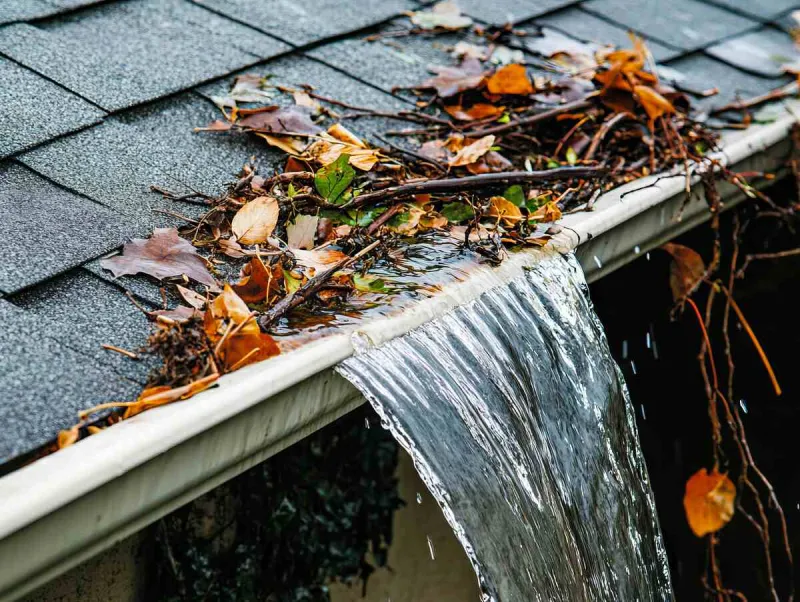
If you have noticed signs of wear on your roof — staining on ceilings, granules collecting in your gutters, visible shingle damage after a storm — the time to call is now, not next season. The Niagara region's climate will not pause while you deliberate, and neither will the compounding costs of delay.