Winter Is the Real Interview: Ranking Roofing Materials Against a Niagara January
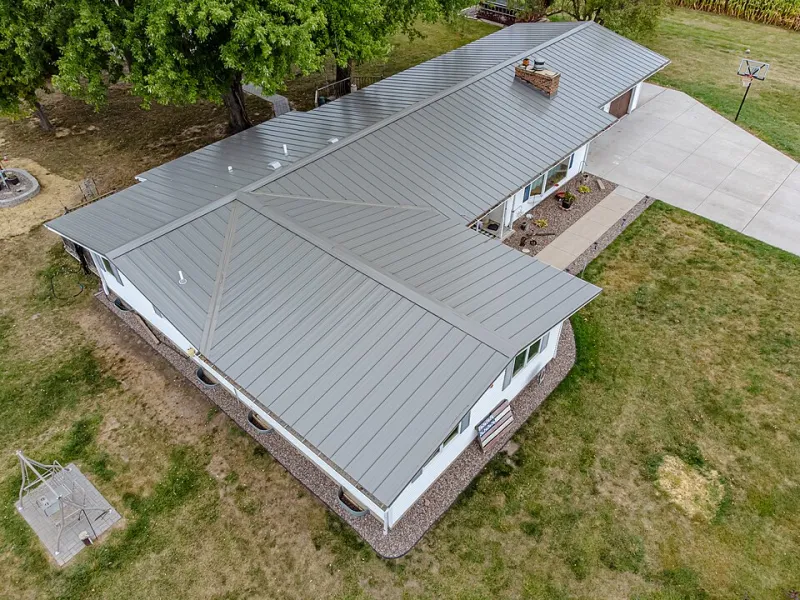
Photo: Wikideas1, CC0, via Wikimedia Commons
Every roofing material looks capable in a brochure. The honest test isn't the sales sheet, though — it's the third week of January, when the temperature swings from minus twelve overnight to plus four by afternoon, and the snow on your roof melts, refreezes, and melts again. In the Niagara Region, that cycle repeats dozens of times each winter, and it is far more destructive than cold alone.
If you're planning a roof replacement in St. Catharines, it pays to judge your options against our specific climate rather than a national average. Here's how the three most common residential systems stack up.
The Opponent: What a Niagara Winter Actually Does to a Roof
Three forces do most of the damage locally:
- Freeze-thaw cycling. Water that slips into a tiny gap expands roughly nine percent when it freezes, prying materials apart a little further each cycle.
- Lake-effect snow. Proximity to Lake Ontario means heavier, wetter snowfalls than communities further inland, adding sustained load and, more importantly, a slow, steady supply of meltwater.
- Ice damming. Heat escaping through the attic melts snow at the ridge; that water refreezes at the cold eaves, forming a dam that pushes meltwater back up under the roofing material.
Any material you choose must handle all three — not just the cold.
Asphalt Shingles: The Dependable Middle Ground
Fibreglass-based asphalt shingles remain the most common choice in St. Catharines, and for good reason. They're flexible enough to tolerate thermal movement, they shed water reliably when properly lapped, and they're the easiest system to repair a section of after a rough winter.
Their weaknesses are the freeze-thaw cycle's favourites: the sealant strip that bonds each shingle down can break down over time, and any lifted edge becomes an entry point for wind-driven rain and ice. In our climate, a quality architectural shingle realistically delivers 20 to 25 years, with premium lines pushing toward 30.
Budget expectations: $5,000 to $10,000 for a typical St. Catharines bungalow or two-storey, depending on pitch, storey count, and tear-off requirements. The catch with ice dams — shingles alone can't stop backup water, so proper underlayment and attic ventilation matter as much as the shingle itself.
Standing Seam Metal: Built for Snow and Ice
Metal roofing is arguably the best-engineered answer to a Niagara winter. Snow slides off metal surfaces before it can accumulate into deep loads, and because metal panels are impervious to water absorption, freeze-thaw cycling has very little to attack. There's no granule loss, no sealant strip to fail, and no saturated material to fracture.
The trade-offs are cost and installation skill. A standing seam roof on the same bungalow typically runs $15,000 to $25,000 or more, but the lifespan — 40 to 50 years in this climate — means many homeowners will replace an asphalt roof twice before the metal needs attention. Ice damming is also less catastrophic, since water backing up under a metal panel meets a non-absorbent surface rather than porous material.
Two local notes: proper snow-guard installation matters if the panels over a walkway or driveway, and metal requires a contractor experienced with the system — not every crew installs it well.
Flat and Low-Slope Systems: A Different Game Entirely
For additions, garages, and the flat-roof sections common on older St. Catharines homes, the material question shifts from shingles versus metal to membrane selection. Modified bitumen and single-ply membranes (such as EPDM or TPO) are the standard options.
Flat roofs are uniquely vulnerable to winter here because ponding water — even a shallow pool — becomes an ice sheet that stresses seams and membrane edges. The winning strategy is drainage: properly sloped decks, clear scuppers, and well-maintained flashing. A well-installed flat roof system in the Niagara climate lasts 20 to 30 years, at a cost of roughly $8 to $14 per square foot installed.
Matching Budget to Weather Reality
There's no single right answer — only the right match for your house, your timeline, and your finances:
- Tight budget, planning to stay 10–15 years? Quality architectural asphalt with upgraded ice-and-water underlayment at the eaves is the pragmatic call.
- Planning to stay long-term? Metal's higher upfront cost is often the cheaper option per year of service.
- Flat-roof sections? Spend on drainage and flashing details before upgrading membrane grade; water that can't leave will defeat any material.
Whatever you choose, remember that in this climate, installation quality and attic ventilation influence winter performance as much as the material itself. A mid-range shingle installed correctly will outlast a premium product installed carelessly — every single January.