What Roofing Contractors See That You Don't: A Professional Inspection Breakdown for St. Catharines Homes

Photo by Photo by Raze Solar on Unsplash on Unsplash
Most homeowners glance at their roof and see shingles. A trained roofing contractor sees something far more complex — a system of interdependent components, each capable of failing quietly before any visible damage ever appears on an interior ceiling. In a climate as demanding as Niagara's, that distinction matters considerably.
Every season in St. Catharines brings a fresh set of stressors: freeze-thaw cycles in late winter, ice accumulation along eaves, summer UV exposure, and the persistent moisture that rolls in off Lake Ontario. By the time a homeowner notices a water stain on the drywall or a shingle on the lawn, the underlying problem has often been developing for months — sometimes years.
The following is a professional walkthrough of what experienced roofing contractors actually look for during an inspection, and why so many of these warning signs go unnoticed by the untrained eye.
Granule Loss: More Than a Cosmetic Concern
Asphalt shingles are coated with mineral granules that serve a critical protective function — they shield the underlying bitumen from UV degradation and help shed water efficiently. When those granules begin to loosen, the shingle's lifespan accelerates toward its end.
Homeowners sometimes notice granules collecting in gutters or at the base of downspouts, but they rarely connect that observation to roof performance. A contractor, however, examines granule loss with far greater precision. Uniform granule shedding across an older roof tells a different story than concentrated loss in specific zones — particularly around ridges, valleys, or areas directly beneath tree coverage.
Patchy granule loss can indicate manufacturing defects, hail impact, or improper installation. A professional will distinguish between normal weathering on a 15-year-old roof and premature degradation on a roof that should have years of service remaining.
Flashing: The Most Commonly Overlooked Failure Point
If there is a single component that roofing contractors find homeowners consistently underestimate, it is flashing. These thin strips of metal — typically galvanized steel or aluminium — seal the transitions between your roof surface and vertical structures such as chimneys, skylights, dormers, and plumbing vents.
Flashing fails in ways that are rarely dramatic. The sealant around a chimney base dries and cracks. A step flashing pulls away slightly from a dormer wall. A pipe boot collar hardens and splits. None of these failures are visible from ground level, and none of them announce themselves with immediate leaks. Instead, water infiltrates gradually, travelling along roof decking and rafters before eventually finding its way into living spaces — often several metres from the original entry point.
During a professional inspection, every flashing junction is examined closely. Contractors look for rust staining, lifted edges, missing sealant, and signs of previous patch repairs that may have addressed symptoms without resolving the root cause.
Sagging and Deck Deflection
A structurally sound roof deck should be firm and flat. When a contractor walks a roof — which is standard practice during a thorough inspection — they are paying attention to how the surface responds underfoot. Soft spots, subtle depressions, or areas with slight bounce indicate moisture damage to the underlying decking material.
OSB and plywood sheathing absorb water when the protective layers above them are compromised. Once saturated, these materials swell, delaminate, and lose structural integrity. Left unaddressed, deck damage creates the conditions for shingle failure, poor fastener hold, and in severe cases, structural compromise.
From the ground, a homeowner might notice a slight wave or dip in the roofline. A contractor will identify whether that deflection is cosmetic or indicative of systemic decay beneath the surface.
Ventilation Imbalances That Accelerate Deterioration
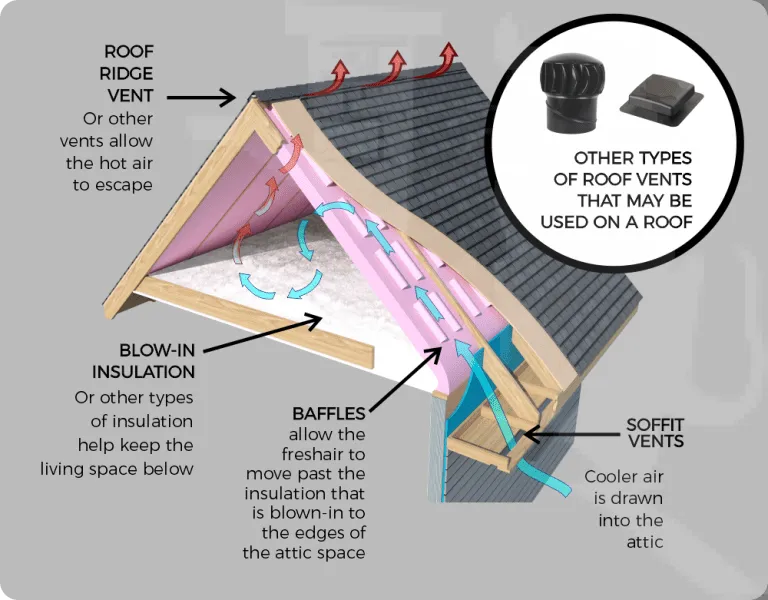
Proper attic ventilation is not simply an energy efficiency concern — it is a roofing durability concern. When intake and exhaust ventilation are imbalanced, heat and moisture accumulate in the attic space. In winter, that trapped warmth contributes to ice dam formation along eaves. In summer, excessive heat accelerates shingle ageing from beneath.
Contractors assess ventilation as part of a comprehensive roof inspection by checking soffit vents for blockage, examining ridge vent continuity, and looking for signs of condensation or staining on visible rafter surfaces. Many homeowners in St. Catharines are unaware that their attic insulation — often added during a renovation — has inadvertently covered soffit vents, restricting airflow and silently shortening their roof's service life.
Valley Wear and Water Concentration Zones
Roof valleys are the channels formed where two sloping roof planes meet. Because they funnel the entire volume of water from adjoining roof sections into a single pathway, they experience disproportionate wear relative to the rest of the roof surface.
A contractor inspecting a valley examines the integrity of the valley lining — whether open metal, closed-cut shingles, or woven shingles — for signs of erosion, cracking, or granule loss concentrated along the centreline. They also look for debris accumulation, which can cause water to back up and infiltrate beneath shingles during heavy rainfall events.
Homeowners rarely get close enough to valleys to assess their condition, and photographs taken from ground level rarely reveal the detail necessary to evaluate wear accurately.
When Normal Wear Ends and Professional Intervention Begins
Not every imperfection on a roof requires immediate action. A reputable contractor will tell you honestly when observed wear falls within normal parameters for a roof of a given age and material type. A few cracked caulk lines on an otherwise sound ten-year-old roof are not a crisis. Surface oxidation on metal flashing does not necessarily indicate failure.
What distinguishes a trustworthy inspection from an alarmist sales pitch is specificity. A qualified roofing professional will document observations with photographs, explain the mechanism by which each issue poses a risk, and provide a clear timeline for recommended action — distinguishing between what requires attention now and what should simply be monitored.
For St. Catharines homeowners, the general guidance is this: a professional roof inspection is warranted after any significant weather event, following the purchase of a property with an unknown roof history, when a roof approaches the ten-year mark, and any time interior signs of moisture — staining, peeling paint, or musty odours in upper-floor rooms — appear without an obvious explanation.
The Value of an Experienced Set of Eyes
The Niagara Region's climate is not forgiving of roofing deficiencies. What might be a minor flashing gap in a drier climate becomes a significant moisture intrusion point when exposed to the precipitation volumes and temperature swings that characterise a St. Catharines winter and spring.
Professional roofing contractors bring pattern recognition developed across hundreds of inspections — they have seen how specific failure modes progress, how certain installation shortcuts reveal themselves years later, and how regional climate conditions interact with particular materials and roof geometries.
That experience cannot be replicated by a homeowner standing in the driveway with a pair of binoculars. It is not a criticism — it is simply the nature of specialised knowledge. Knowing when to call a professional is itself a form of informed homeownership, and in the context of roof maintenance, it is often the decision that prevents a manageable repair from becoming a structural replacement.
If you have concerns about your roof's current condition or simply want a baseline assessment before the next season arrives, contact St. Catharines Roofing Pros for a professional inspection. We serve residential and commercial properties throughout the Niagara Region.